Protecting Your Ears: Preventing Noise-Induced Hearing Loss
|
Ethan Chen
|
|
3 Min Read

We all enjoy getting out and having fun, but some sounds can be louder than you think. Being around loud noises for too long can cause permanent damage to your hearing, even if you don’t notice it right away.
Common places with loud noise
Concerts and live music events
Weddings or parties with loud music or DJs
Riding a motorcycle
Using lawnmowers or other power tools
Operating heavy machinery
Recreational shooting
Two things affect your risk of hearing damage:
How loud a sound is (measured in decibels, or dBA)
How long you are around the sound
How long is it safe to be around loud noise?
We recommend following the NIOSH (National Institute for Occupational Safety and Health) guidelines. As noise gets louder, the amount of time you can safely be around it gets shorter.
For example:
85 dBA (about as loud as busy city traffic): Safe for about 8 hours
100 dBA (about as loud as a lawnmower or a concert): Safe for only about 15 minutes
Below is a chart to show you how quickly safe listening times change based on volume:
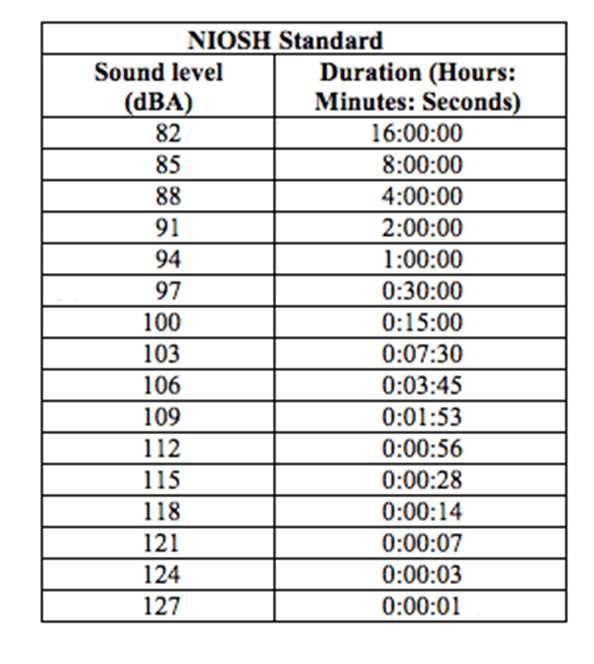
Figure 1: Safe listening times from NIOSH.
How to know when it’s too loud:
A quick rule of thumb:
If you have to raise your voice or yell so that the person next to you can hear, the environment is probably too loud. That’s a good time to wear hearing protection.
If your ears ring or sound muffled after a loud event, the noise was loud enough to damage your hearing.
You don't have to guess if a place is too loud. There are easy tools that can measure noise levels for you.
Some easy options include:
The NIOSH Sound Level Meter app (available for iPhones, free)
Smartphones and smartwatches, which may alert you when the noise around you is loud enough to damage your hearing
Protecting Your Hearing
The good news is that protecting your hearing is simple. The best type of hearing protection depends on what you’re doing.
For very loud activities:
In extreme noise and when you don’t need to hear others, it’s important to block out as much sound as possible.
Examples include:
Mowing the lawn
Using power tools
Going to a shooting range
Foam earplugs, over-the-ear earmuffs, or custom earplugs all work well for these situations. In very loud places, wearing both together provides even more protection.
If you hunt or enjoy target shooting, ask your audiologist about special shooting earplugs. They reduce the sound of gunshots while still allowing you to hear conversations and other important sounds.
For concerts & social events:
At concerts, weddings, or busy restaurants, you still want to hear the music and talk with friends—but at a safer volume.
Musician's earplugs lower the volume without making music and conversations sound muffled. They let you enjoy music while helping protect your hearing.
You can buy ready-made musician's earplugs, or we can make custom earplugs that are shaped to fit your ears for extra comfort. Both options are available in our office.
Healthy Headphone Habits
Listening through headphones is part of everyday life. These simple tips can help protect your hearing:
Keep the volume at 75% or lower.
Try to limit headphone use to less than 8 hours a day.
Tip: Many smartphones have built-in hearing safety features that will warn you if your headphone volume is too loud for too long. You can also purchase volume limiting headphones.
What if you wear hearing aids?
Hearing aids are not hearing protection. While properly programmed hearing aids should not amplify sounds to unsafe levels, they also do not protect your ears from loud noise. If you are in a noisy environment, you should still wear hearing protection.
When should you see an audiologist
You notice changes in your hearing.
You develop ringing (tinnitus), or your tinnitus becomes worse, especially after a loud event.
You have questions about the best hearing protection for your lifestyle or work.
Protecting your hearing today can help you continue enjoying conversations, music, and the sounds you love for years to come. Get in touch with our team today to learn more about hearing protection and hearing care!
References
Figure 1: Data taken from MeCart and adapted from NIOSH standards.